AI and the New Insurance Landscape for Insurance Agents
Artificial intelligence (AI) is no longer futuristic — it’s reshaping how insurance is marketed, sold and serviced. Clients expect quick answers, personalized service, and digital convenience that matches what they get in other industries. In fact, an estimated 90% of insurance companies will incorporate AI into their core systems by 2026. While large carriers are investing heavily, independent agents can use the same tools to compete and stand out.
By freeing up time from routine tasks, you can focus on strengthening client relationships and growing your book of business. At the same time, technology introduces new risks in your workflow, which is why errors and omissions (E&O) insurance remains essential protection when missteps occur.
For agents, the opportunity is clear: use AI as a strategic tool to improve efficiency, strengthen client relationships and compete more effectively. The advantage is not just efficiency. It is the ability to respond faster, document decisions more clearly and reduce exposure before issues turn into claims.
Understanding AI Tools and Their Role in Insurance Agencies
Think of AI as a digital assistant that analyzes data quickly and surfaces actionable insights.
Benefits of Using AI as an Insurance Agent or Agency:
AI delivers practical advantages for agencies:
- Automates routine tasks so you can focus on advising and selling
- Flags missing or inconsistent information to reduce errors
- Supports lead generation and follow-up to improve growth consistency
AI does not replace the advisor’s role. Clients still expect guidance, context, and trust, which technology alone cannot deliver. The agents who thrive will combine AI’s analytical power with their own expertise and service.
A 2024 Agent for the Future study found that while only 6 percent of agency principals currently use AI, 36 percent expect to adopt AI within five years. That means the adoption curve is steep, and agencies that move first will have a measurable advantage.
Enhancing Risk Assessment and Underwriting
One of the most direct uses of AI underwriting insurance tools is in risk assessment. Instead of relying only on manual data checks, AI can scan claims histories, financial records, and even market trends to highlight risks. Traditional methods can miss subtle red flags that AI can detect instantly, reducing the likelihood of E&O-related oversights.
AI-Powered Tools for Insurance Agents:
- Analyze lead forms, client inquiries, and online behavior to help prioritize prospects and personalize outreach.
- Flag missing or incomplete information within secure agency management systems before submission, helping prevent delays and compliance issues.
- Identify coverage gaps across your existing book of business, so you can reach out proactively with tailored solutions.
AI can help agents review applications more thoroughly, catch missing details before submission, and recommend coverage adjustments that reduce the chance of client disputes or policy rejections. AI tools help ensure consistent pricing and complete applications, reducing back-and-forth and client frustration. For you, that means fewer surprises, more accurate policies, and reduced liability exposure.
Underwriting errors remain one of the top drivers of E&O claims. AI can help flag inconsistencies and missing information early, reducing the likelihood of disputes while improving accuracy.
Agent Tip: AI strengthens defensibility by helping you identify and document decisions before a submission is finalized. Pair AI-generated flags with manual review and document decisions in your AMS to support defensibility.
Improving Client Service and Building a Personalized Customer Experience with AI
AI helps agents deliver that level of responsiveness without adding staff or increasing workload.
AI-powered chatbots and CRM tools can answer routine questions, capture leads, and ensure consistent follow-up without delays. Industry data shows that more than 70 percent of insurers already use AI to automate customer service, and agencies adopting these tools have reported measurable reductions in client complaints. Fast, consistent and effective communication strategies not only improves client satisfaction but also reduces misunderstandings that can lead to E&O exposure. Consistency at scale is what most agencies struggle with, and this is where AI creates a measurable advantage.
Quick wins for agents: Start by deploying a chatbot on your website or using an AI-enhanced CRM to personalize email campaigns. These small steps can immediately improve responsiveness and client engagement while freeing up your time for higher-value conversations.
Streamlining Claims Management
Claims handling is one of the most sensitive client touchpoints and a common source of E&O exposure if mishandled. AI-powered claims tools can reduce delays, improve accuracy, and keep clients informed:
- Automate document collection and data entry, saving time for both you and the client.
- Flag incomplete or inconsistent information before it causes costly delays.
- Detect suspicious activity that may indicate fraud, reducing the chance of disputes.
- Route claims to the right adjuster faster, accelerating resolution.
AI has been shown to reduce claims processing times by up to 60 percent and improve fraud detection by 40 percent. For agents, that means faster resolutions, fewer client complaints, and less risk of professional liability.
Action step: Evaluate claims management tools that integrate directly with your existing management system. Even if you do not process claims in-house, AI can help you monitor progress and keep clients updated, showing them that you are proactive and reliable.
Supporting Regulatory Compliance and Risk Mitigation
AI compliance tools monitor regulatory updates, check files for missing information, and manage licensing or CE deadlines. In 2024, NAIC’s bulletin and state-level adoptions made regulatory risk a top concern, with more than half of insurers citing AI compliance as a primary challenge. The same year, the NAIC issued new guidance requiring transparency and documentation for AI-supported decisions.
AI improves compliance consistency, but human oversight and E&O coverage remain essential safeguards.
Key Capabilities:
- Monitor evolving state and federal regulations and send alerts when requirements change.
- Check client files for missing forms or outdated documents.
- Flag potential compliance gaps before they become audit findings or lawsuits.
Action step: Use AI tools that track regulatory changes and generate compliance checklists, then document file completeness to support defensibility.
Driving Business Growth and Competitive Advantage with AI
Agents who use AI effectively can reach new markets, win better clients, and retain business longer. Predictive analytics highlight high-lifetime-value prospects, while portfolio analysis suggests cross-sell opportunities. For agencies, this translates into higher revenue with less wasted effort.
In 2024 Deloitte projected AI will increase underwriting profitability by double digits as adoption accelerates. On the heels of greater adoption, the global AI in insurance market is forecast to grow to USD 10.24 billion in 2025, a compound annual growth rate (CAGR) of 32.8 percent.
How AI Drives Growth:
- Identifies high-value prospects. Predictive analytics highlight clients with higher lifetime value, so you know where to focus your time.
- Uncovers cross-sell opportunities. AI analyzes client portfolios and recommends products they are most likely to need next.
- Optimizes marketing. AI-powered systems can test different messages, emails, and ads, then automatically adjust campaigns to what works best.
These capabilities allow agents to focus on higher-value opportunities while maintaining consistent communication across their client base without increasing workload. In practice, this means less time chasing low-probability leads and more time closing and retaining the right clients.
Agencies adopting AI are already outpacing competitors who rely on manual processes.
Action step: Start small by using AI-driven lead scoring in your CRM or letting AI tools analyze which policies in your book are most at risk of lapse. This helps you prioritize your outreach and increase retention before you lose revenue.
Challenges and Considerations in Adopting AI
While AI offers clear advantages, it also introduces risks that require careful oversight.
WTW reported in 2025 that insurers are increasingly focused on data privacy AI insurance risks, and that AI introduces entirely new exposures for cyber and E&O policies.
The primary risks and AI challenges agents need to mitigate and plan for converge around data privacy, regulatory scrutiny on decision-making processes and overreliance on automation. The risk is not using AI. It is using it without clear processes and documentation.
Action step: Before adopting an AI tool, ask vendors how they handle compliance, data security, and transparency. Document your due diligence, and review your E&O coverage to confirm how it may respond to AI-related exposures. Most E&O policies do not yet include specific AI language, though endorsements and exclusions may evolve as insurers respond to emerging risks and claims trends.
The Future of AI and E&O Insurance for Insurance Agents
AI will continue expanding across underwriting, claims, and client engagement, while regulators increase expectations around transparency and documentation. As adoption grows, E&O policies may evolve to address risks tied to automated decision-making and data-driven recommendations.
Action step: Stay informed on AI regulations and review your E&O coverage regularly to ensure your coverage keeps pace with new risks.
Conclusion: Innovation + Protection
For independent agents and agencies, the choice is simple: use AI to work smarter and compete more effectively, or risk falling behind.
The most effective approach is balance. AI improves efficiency and insight, but it does not eliminate risk. Human judgment, documentation, and strong E&O coverage remain essential.
The advantage is not AI alone, but how effectively it is applied alongside sound risk management. Agents who combine technology with professional oversight will be better positioned to compete, retain clients, and grow.
Embrace AI with confidence, but never without protection. That combination—innovation plus E&O insurance—ensures you stay ahead of the competition today and well into the future.
Frequently Asked Questions (FAQs)
Do agents still need E&O insurance if they use AI?
Yes. AI reduces errors, but it cannot eliminate liability. E&O insurance remains essential to protect against disputes or incorrect recommendations.
How does AI reduce the risk of E&O claims for insurance agents?
AI reduces risk by flagging missing information, inconsistencies, and compliance gaps before they lead to issues. It does not eliminate exposure or replace professional judgment.
What first steps should insurance agents take to adopt AI responsibly?
Start with simple use cases like chatbots or CRM automation. Maintain oversight and confirm your E&O policy accounts for AI-related risks.
What are the best AI tools for insurance agents to start with?
Most agents start with AI-enhanced CRMs, chatbots for client service, and lead scoring tools. These solutions are easy to implement and improve responsiveness, organization, and conversion rates.

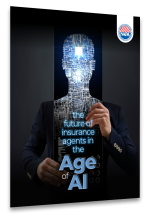
After centuries of cautious management, insurance faces a tech wave threatening the role of human agents. But will AI reshape the industry as expected? Find out in our free whitepaper.